

Selecting the right bearing swaging tool is a bigger decision than most teams expect. Aerospace technicians need repeatable forming pressure, controlled alignment, and clean, uniform retention—no matter where the aircraft or assembly sits. Some jobs demand the stability of a drill press swaging tool, while others depend on the flexibility of a portable tri-roller system. Both tools support secure swaged bearing retention, but their strengths shine in different environments. With so many programs requiring tight repeatability and documentation, choosing the wrong setup can slow down workflow or increase rework.
In this guide, we break down the differences, advantages, and use cases to help you select the right aerospace swaging method with confidence.
Understanding Bearing Swaging in Aerospace Applications
Swaging deforms a bearing’s outer race or housing edge to lock it securely in place.
Even small errors in force, angle, or depth affect long-term performance.
A bearing swaging tool prevents:
- Race distortion
- Uneven swage depth
- Housing damage
- Misalignment during retention
Aerospace bearing retention standards demand consistent forming geometry, and proper aerospace bearing tools ensure the same result every time.
What Is a Drill Press Swaging Tool?
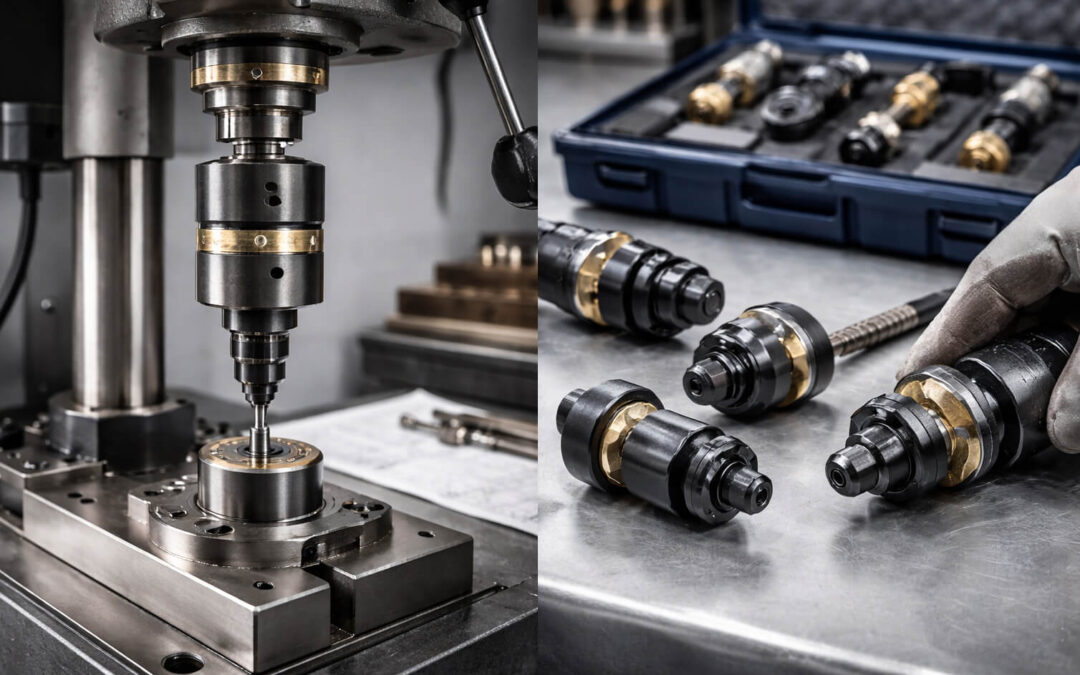
A drill press swaging tool is a fixed, shop-based setup designed for maximum control and repeatability.
Key advantages
- Stable, consistent downforce
- Square alignment on every swage
- Ideal for production volume
- Perfect for deep housings and rigid structures
In controlled shop environments, a drill press unit becomes the preferred form of bearing equipment due to its predictable accuracy and low operator variability.
How Portable Tri-Roller Swaging Tools Work
The tri-roller swaging tool uses three rollers to form the bearing edge evenly as the tool rotates.
Portable models allow technicians to work directly on the aircraft or in restricted spaces.
Benefits of tri-roller swaging
- Ultra-smooth forming action
- Adaptable to many access angles
- Perfect for on-wing or in-hangar work
- No need to remove the assembly
Because they’re portable, tri-roller units handle complex placements where a bench-mounted system cannot fit.
Precision, Consistency, and Operator Control Compared
Both tool types achieve reliable results, but the method varies.
Drill Press Swaging Tools
- Best for precision-critical production
- Controlled by machine alignment
- Minimal operator influence
Portable Tri-Roller Swaging Tool
- Great control in confined areas
- Smooth forming from rolling action
- Operator skill matters slightly more
Both remain valid bearing swaging tools, but their environments define their strengths.
Shop-Based vs On-Wing Swaging Applications
Shop-Based (Drill Press)
Use when:
- Assemblies are fully accessible
- You want strict repeatability
- You’re supporting high-volume production
On-Wing / In-Field (Tri-Roller)
Use when:
- Removing the assembly is impractical
- Access is limited
- You need mobility and speed
Portable solutions solve problems that fixed machinery cannot.
Tool Selection Based on Bearing Size and Material
Different swaging tools support different geometries.
Drill Press Ideal For:
- Larger bearings
- Thick housings
- Heavy-duty retention requirements
Tri-Roller Ideal For:
- Small to medium bearings
- Lightweight structures
- Tight-access areas
When working with thin materials, the smooth rolling action of the tri-roller prevents unwanted distortion of swaged bearing surfaces.
Comparison Table: Drill Press vs Tri-Roller Swaging Tools
| Feature | Drill Press Swaging Tool | Tri-Roller Swaging Tool |
| Primary Use | Shop production | Field / on-wing work |
| Force Control | Machine-guided | Roller-driven |
| Portability | Fixed | Highly portable |
| Alignment | Extremely precise | Flexible access |
| Best For | Large/heavy structures | Tight or restricted spaces |
| Operator Influence | Low | Moderate |
When to Use Each Swaging Method
Use a drill press swaging tool when:
- You need maximum precision
- Working on rigid housings
- Supporting high-throughput production
Use a tri-roller swaging tool when:
- Swaging on the aircraft
- Working in tight or awkward positions
- Handling smaller or more delicate assemblies
Both remain essential options in professional bearing staking tools inventories.
FAQ
- Does a drill press provide better accuracy than a portable tri-roller?
A. In shop environments, yes. It offers consistent force and alignment. - Is a tri-roller strong enough for thicker housings?
A. Yes, depending on the model, though very heavy housings often favor a drill press. - Can both tools meet aerospace retention standards?
A. Absolutely. Both methods achieve compliant swaging when used correctly.
Choosing the Most Reliable Setup for Your Workflow
A dependable bearing swaging tool, whether a drill press system or a portable tri-roller, keeps every installation consistent, controlled, and fully compliant with aerospace standards. The right choice depends on access, housing design, and the demands of your workflow. Each method brings strengths that support precision and repeatability in different environments.
If your team needs support in selecting the correct swaging setup or reviewing your current tooling options, contact us to speak with Aero Staking’s aerospace tooling specialists.