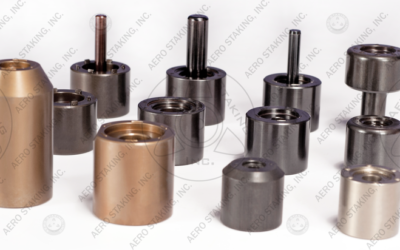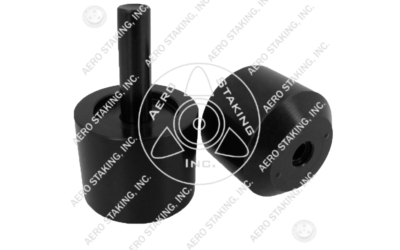
A swaging tool rarely fails all at once. It drifts. A roller develops a small flat, an axle picks up a little play, a shank loses some of its straightness, and the swaged lips coming off the machine start to look slightly different from the ones produced last quarter....
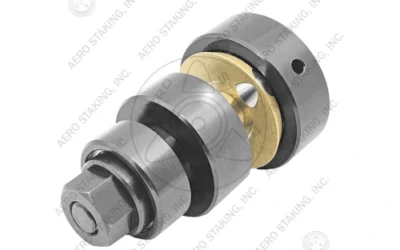
Bearing Tools
Aerospace Bearing Retention Methods: Key Factors Engineers Should Evaluate
A bearing that moves in its housing stops doing its job. It can walk out of the bore, fret against the housing, load a neighboring part it was never meant to touch or release debris into an engine or airframe. Retention is the design decision that prevents all of...
Understanding Bearing Swaging Force and Its Impact on Aerospace Assemblies
A swaged bearing holds its position because a thin lip of metal on its outer ring was formed outward onto the chamfer of the housing bore. That lip is small, often a fraction of a millimeter thick, yet it carries the axial load that keeps the bearing seated in a...
Bearing Staking vs. Swaging: Aerospace Applications
Comparing bearing staking vs. swaging requires more than choosing between two tool names. Both methods secure bearings through controlled metal deformation. In workshop terminology, staking often describes pressing with stationary dies, while roller swaging forms a...
How Does the Bearing Swaging Process Work?
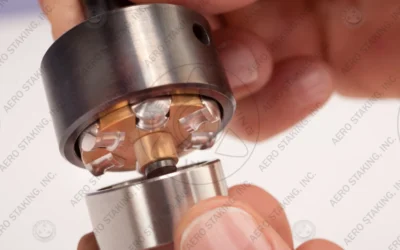
The bearing swaging process secures a bearing by forming a designed metal lip against its housing. In common aerospace applications, rollers work around a grooved outer ring, creating mechanical retention without welding. The goal combines secure positioning with the...
Choosing Between Standard and Custom Bearing Tooling
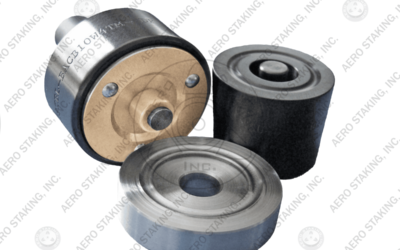
Choosing the right aerospace tooling affects accuracy, efficiency, component protection, and operating costs. Standard tools work well for common bearing sizes and established procedures. However, unusual geometries, limited access, or strict tolerances may require...
Bearing Tool Maintenance: Extend Aerospace Equipment Life
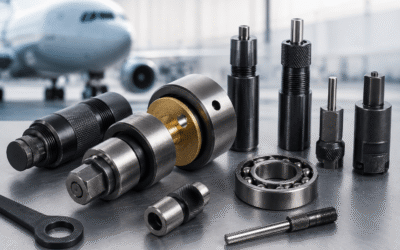
Reliable bearing tools help aerospace manufacturers and MRO teams complete production, repair, and overhaul tasks accurately. Repeated loads, debris, poor handling, and improper storage can reduce tool precision over time. A planned maintenance program helps detect...
Choosing Between Standard and Custom Bearing Tool Kits for Aerospace Projects
Aerospace manufacturers rely on specialized tooling to install and remove bearings without damaging critical components. Selecting the right tooling improves assembly accuracy, protects expensive parts, and supports efficient production. While standard tools work well...
Bearing Tool Maintenance: How to Extend the Life of Your Aerospace Equipment
Reliable tooling is essential for accurate aerospace manufacturing and maintenance. Over time, even high-quality bearing tools experience wear from repeated use, environmental exposure, and improper handling. Without routine maintenance, tool performance can decline,...
How the Right Bearing Equipment Improves Aerospace Production Quality
Aerospace manufacturing demands exceptional accuracy at every stage of production. Even small installation errors can affect component performance, increase waste, and lead to costly rework. Using the right bearing equipment helps manufacturers achieve accurate...