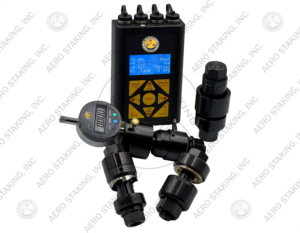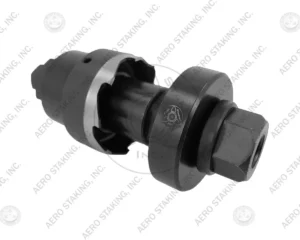



Precision drives every aerospace assembly process. Bearings support movement in flight controls, landing gear, and structural joints. Installing or removing them requires careful control and reliable tooling. Standard shop equipment may work for simple mechanical tasks. Aerospace structures, however, rarely offer simple conditions. Tight clearances, unique housings, and strict tolerance limits quickly create challenges. That is where aerospace bearing tools move beyond generic equipment and become engineered solutions. Custom tooling protects surrounding structures, applies controlled force, and helps technicians achieve consistent results. It also reduces the risk of component damage during installation or removal. When aerospace programs encounter complex geometries or demanding repeatability requirements, specialized aerospace bearing tools become essential for safe, reliable operations.
When Standard Bearing Tools Fall Short
Standard shop equipment works well in basic mechanical environments. Aerospace assemblies introduce tighter tolerances and limited working space. Aircraft structures often involve lightweight materials, narrow access points, and sensitive surrounding components. Under these conditions, generic bearing tools or press adapters can cause alignment problems or apply uneven force.
When installations become difficult or inconsistent, technicians often rely on specialized bearing equipment designed for controlled installation and removal.
Complex Geometries and Access Limitations
Bearings in aircraft assemblies rarely sit in open locations. They are often installed inside brackets, structural frames, or landing gear systems.
These conditions limit the effectiveness of traditional tools for bearings.
Technicians frequently face:
- Deep housing locations
- Limited swing clearance
- Restricted access points
- Obstructed installation paths
Custom bearing install tools guide the bearing into position while maintaining alignment. Removal presents similar challenges. Standard pullers may slip or damage nearby structures.
Purpose-built bearing removal tools grip the bearing correctly and apply balanced extraction force, reducing the chance of structural damage.
Repeatability and Precision Requirements
Aircraft maintenance demands consistent results. Each installation must meet the same structural and dimensional standards.
Specialized aerospace bearing tools help maintain repeatability by guiding the process and controlling applied force.
Precision improves through:
- Controlled installation pressure
- Guided alignment surfaces
- Stable tool positioning
Some assemblies also require mechanical retention methods using bearing staking tools or bearing swaging tools, which secure the bearing after installation.
Engineers studying installation systems often review a detailed bearing equipment overview to better understand how specialized tooling improves reliability.
Designing Custom Installation and Removal Tools
Custom tooling begins with engineering analysis. Designers evaluate bearing dimensions, housing geometry, and access constraints before creating specialized bearing tools.
Typical solutions include:
- Precision mandrels
- Alignment sleeves
- Controlled press adapters
- Modular custom bearing tool kits
Programs frequently review available bearing installation tool solutions before deciding whether custom equipment is required.
Benefits of Program-Specific Tooling
Custom aerospace bearing tools improve installation control and maintenance efficiency.
Benefits include:
- Better alignment accuracy
- Reduced installation errors
- Lower risk of structural damage
- Faster maintenance procedures
When tooling matches the aircraft structure, technicians complete installations more safely and consistently.
ROI Analysis: Custom Tooling vs Rework Costs
Installation errors can lead to expensive rework. Component replacement, structural repairs, and maintenance delays often cost far more than specialized tooling.
Investing in properly designed tools for bearings helps prevent these issues and protects high-value aerospace components.
Teams evaluating tooling improvements can request a tooling consultation with us at Aero Staking Inc. to explore solutions designed for their specific installation requirements.
Comparison Table: Standard vs Custom Tooling
| Feature | Standard Tooling | Custom Tooling |
| Access flexibility | Limited | Designed for geometry |
| Installation precision | Moderate | High |
| Repeatability | Operator dependent | Consistent |
| Structural protection | Limited | Optimized |
Custom aerospace bearing tools provide greater control when aircraft assemblies demand precise installation.
FAQ
Q. When are custom aerospace bearing tools required?
A. They are used when access is restricted, tolerances are tight, or installations must remain consistent across multiple aircraft.
Q. Can standard bearing tools damage aircraft components?
A. Yes. Generic bearing tools may apply uneven force or cause misalignment.
Q. What are bearing swaging tools used for?
A. Bearing swaging tools deform the surrounding material to secure the bearing permanently.
Final Thoughts
Aircraft assemblies demand accuracy and repeatable installation processes. Standard equipment often struggles in confined or precision-critical environments.
Custom aerospace bearing tools provide the control required for reliable installations. If your team faces complex bearing installations, contact us to discuss specialized tooling solutions for your aerospace program.