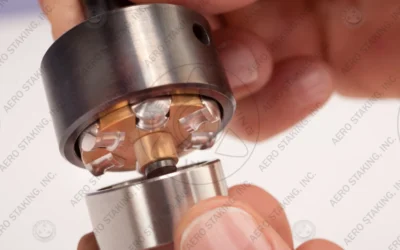
Bearing swaging defects can include uneven forming, excessive deformation, surface damage, and changes in bearing movement. These issues may start with incorrect tooling, poor alignment, unsuitable support, or process settings that do not match the assembly...
Swaging Tools
How Does the Bearing Swaging Process Work?
The bearing swaging process secures a bearing by forming a designed metal lip against its housing. In common aerospace applications, rollers work around a grooved outer ring, creating mechanical retention without welding. The goal combines secure positioning with the...
Bearing Swaging Quality Control: How to Ensure Consistency in Aerospace Applications
Precision is not optional in aerospace manufacturing. When it comes to bearing retention, even minor inconsistencies can lead to costly failures, rework, or safety risks. That is why bearing swaging tools play a critical role in achieving repeatable, controlled...
Bearing Swaging vs Staking: How to Select the Correct Retention Method for Aerospace Applications
Choosing the wrong retention method can turn a good bearing install into a costly rework. In aerospace, the debate often comes down to swageable bearing vs ball bearing retention and whether staking or swaging is the better fit. Both methods serve a purpose, but they...
Drill Press Swaging Tools vs Portable Tri-Roller: Choosing the Right Aerospace Bearing Setup
Selecting the right bearing swaging tool is a bigger decision than most teams expect. Aerospace technicians need repeatable forming pressure, controlled alignment, and clean, uniform retention—no matter where the aircraft or assembly sits. Some jobs demand the...
Swageable Bearing Types vs Ball Bearings: Performance, Price & Applications in Aerospace
ate swageable bearing types early in the design process. These bearings provide secure retention, predictable performance, and excellent durability under stress. Meanwhile, ball bearings remain popular where rotation, speed, and simplicity matter most. In this guide,...