


The bearing swaging process secures a bearing by forming a designed metal lip against its housing. In common aerospace applications, rollers work around a grooved outer ring, creating mechanical retention without welding. The goal combines secure positioning with the bearing movement required by the assembly.
At Aero Staking, we design tooling around the bearing geometry, component access, and specified forming method. Successful results depend on alignment, support, controlled force, and inspection.
This guide explains how the operation works, what changes during forming, and how drill press and portable equipment fit different applications. You will learn which checks help confirm quality before an assembly moves to its next stage of production.
What Is Bearing Swaging?
Swaging reshapes metal to create bearing retention. In common V-groove designs, tooling flares the outer-ring lip over the housing chamfer, its angled bore edge.
Other designs form housing material over the bearing. The assembly drawing identifies the required method and geometry.
How Does the Bearing Swaging Process Work?
Understanding how to swage a bearing starts with the applicable drawing and tooling instructions. The general sequence includes four stages:
- Prepare: Confirm component condition, dimensions, and tooling compatibility.
- Position: Complete bearing installation to the specified location.
- Form: Align the tool and progressively form the retaining lip.
- Inspect: Check progress and complete the opposite side where required.
Use the correct locating fixture for each operation. Follow application-specific requirements for force, speed, lubrication, and inspection.
Why Use Swaging for Aerospace Bearings?
Aerospace bearing swaging creates mechanical retention within assemblies designed for this method. It helps maintain the bearing’s specified position under applicable loads.
Secure positioning must coexist with the required bearing movement. A tight retaining feature alone does not demonstrate an acceptable assembly.
What Happens to the Bearing and Housing?
In V-groove applications, tooling permanently deforms the outer-ring lip against the housing chamfer. The housing receives the lip rather than necessarily undergoing intentional forming.
Housing-over-bearing designs instead form the housing’s retaining material. Neither approach should distort the assembly beyond its specified limits.
Tools Used During the Bearing Swaging Process
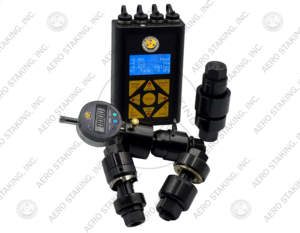
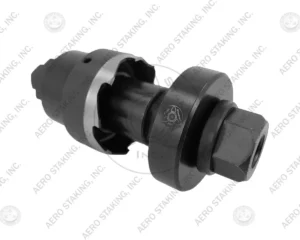
We match swaging tools to component geometry, access, and the specified forming method. Our staking and forming equipment supports different retention designs.
Drill Press Equipment
Our drill press tri-roller equipment combines a rotating head with locating fixtures. This setup suits accessible workshop assemblies.
The rollers form the metal; they do not drill the component.
Portable Equipment
Our portable tri-roller equipment supports work where stationary machinery is impractical. Technicians still need adequate operating clearance, alignment, and support.
Factors That Affect Quality
Consistent Aerospace bearing swaging depends on the complete setup. Review these conditions before forming:
- Groove and chamfer geometry
- Material hardness and component condition
- Bearing position and fixture support
- Roller condition and tool alignment
- Specified lubrication and forming parameters
Excessive pressure can distort the outer ring and affect movement. More force does not automatically improve retention.
Keep debris and excess installation compounds away from the forming area. Inspect tooling regularly for wear or damage.
For repeat production, document the approved setup so operators can reproduce it and identify changes that may affect the finished assembly.
How Is a Properly Swaged Bearing Verified?
Inspect the formed lip against the drawing’s visual and dimensional requirements. Look for uneven forming, cracks, displacement, or surrounding damage.
Where required, proof-load testing checks retention under a specified load. Torque or articulation checks assess bearing movement separately.
Our testing equipment supports assembly verification. Record the required results and resolve failed criteria before accepting the component.
Bearing Swaging Process FAQ
How Do Technicians Learn How to Swage a Bearing?
They follow application-specific training, drawings, and tooling instructions. General guidance cannot establish universal settings or acceptance limits.
Can Portable Equipment Produce Acceptable Results?
Yes, where the application permits it and the completed assembly passes its specified checks.
Does a Uniform Lip Prove Quality?
No. Appearance cannot establish retention strength or confirm acceptable movement. Complete every inspection and test required by the assembly documentation.
Discuss Your Assembly With Our Team
The bearing swaging process combines matched tooling, controlled forming, and specified verification. Contact us at Aero Staking to discuss your bearing geometry, housing, and application requirements.