

Comparing bearing staking vs. swaging requires more than choosing between two tool names. Both methods secure bearings through controlled metal deformation. In workshop terminology, staking often describes pressing with stationary dies, while roller swaging forms a retaining lip progressively through rotation. However, aerospace documents sometimes use staking as a broader term that includes swaging.
At Aero Staking, we focus on the operation your assembly requires, not a label alone. Geometry, material condition, access, and acceptance criteria shape the tooling choice.
This comparison explains the practical differences, where terminology overlaps, and what engineers should review before selecting equipment for production or maintenance. The drawing and procedure remain the starting point throughout.
Bearing Staking vs. Swaging: What’s the Difference?
The practical distinction often concerns tool motion: stationary die pressing versus progressive roller forming. Both can create a retaining feature around a bearing.
Neither term alone identifies which material deforms, the finished profile, or the acceptance requirements. Confirm those details before comparing equipment.
What Is Bearing Staking?
Bearing staking secures a component by permanently displacing selected metal. Depending on the design, the tool forms a bearing lip or housing material.
Anvil dies can flare a grooved outer-ring lip over the housing chamfer. Ball and segment impression methods create different retaining features.
Staking therefore does not always mean isolated punch marks.
What Is Bearing Swaging?
Bearing swaging reshapes a designed retaining feature through controlled forming. In a roller operation, rotating contact progressively works the metal around the circumference.
A V-groove configuration typically flares the outer-ring lip against the housing chamfer. Other configurations form housing material.
A swaged bearing must retain its specified movement after forming.
How the Two Retention Methods Differ
For bearing staking vs. swaging, compare the actual operations rather than assume one always produces better results.
Stationary dies apply forming pressure through their shaped contact surfaces. Roller heads move along the forming path, developing the lip progressively.
Either approach can distort components when tooling, alignment, or force is incorrect. Neither automatically guarantees strength, lower torque, or housing protection.
Tooling Requirements for Staking and Swaging
Tooling must match the retaining geometry and support the assembly correctly.
Stationary Forming Equipment
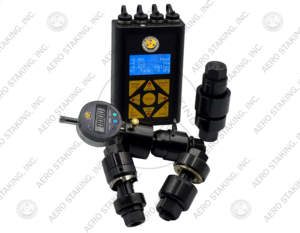
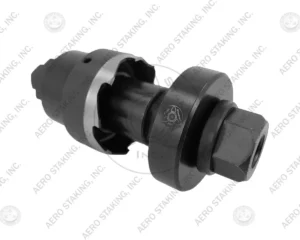
Our staking tools include configurations for different retention operations. Confirm die profile, locating features, press compatibility, and component clearance.
Roller Forming Equipment
Our swaging tools support controlled rotary forming. Check roller geometry, pilot fit, fixtures, and available operating space.
For other profiles, our forming equipment addresses application-specific shaping requirements.
Factors Engineers Consider When Selecting a Retention Process
Selecting aerospace bearing retention starts with the approved assembly requirements. Engineers assess:
- Bearing groove and housing chamfer dimensions
- Material hardness and forming response
- Required retention load and bearing movement
- Tool access and assembly support
- Production volume and maintenance conditions
- Inspection, testing, and replacement requirements
Complete bearing installation to the specified position before retention work. Manufacturing convenience cannot justify substituting an unapproved operation during production or MRO.
During maintenance, review the retaining feature before selecting replacement tooling. A component previously formed by one method does not automatically permit a different method during its next bearing replacement operation.
Comparison Table: Bearing Staking vs. Swaging
This comparison focuses on stationary die staking and roller swaging. Actual tooling, material deformation, and inspection requirements depend on the bearing design and applicable engineering specifications.
| Factor | Stationary Die Staking | Roller Swaging |
| Tool motion | A stationary die applies axial force to deform the retaining feature. | Rollers move around the bearing circumference to progressively form the retaining feature. |
| Typical equipment | A compatible press with application-specific staking dies. | Machine-mounted or portable roller swaging tools. |
| Retaining material | A designated bearing lip or housing feature, depending on the design. | A designated bearing lip or housing feature, depending on the design. |
| Main setup concerns | Die geometry, applied force, bearing support, and alignment. | Roller geometry, forming pressure, bearing support, and alignment. |
| Acceptance criteria | Inspection against applicable drawings and specifications. | Inspection against applicable drawings and specifications. |
Frequently Asked Questions
Is Swaging Always Better?
No. Both bearing retention methods require suitable geometry, controlled forming, and specified verification.
Can Both Methods Serve Aerospace Maintenance?
Yes, where the approved repair procedure permits them. Access and component condition influence equipment selection.
How Do Teams Verify Retention?
Follow required visual, dimensional, proof-load, and movement checks. Our testing equipment supports aerospace bearing retention verification.
Select the Process Your Assembly Requires
Understanding bearing staking vs. swaging means matching the specified operation with suitable tooling and acceptance checks. Contact us at Aero Staking to discuss your component geometry and retention requirements.