

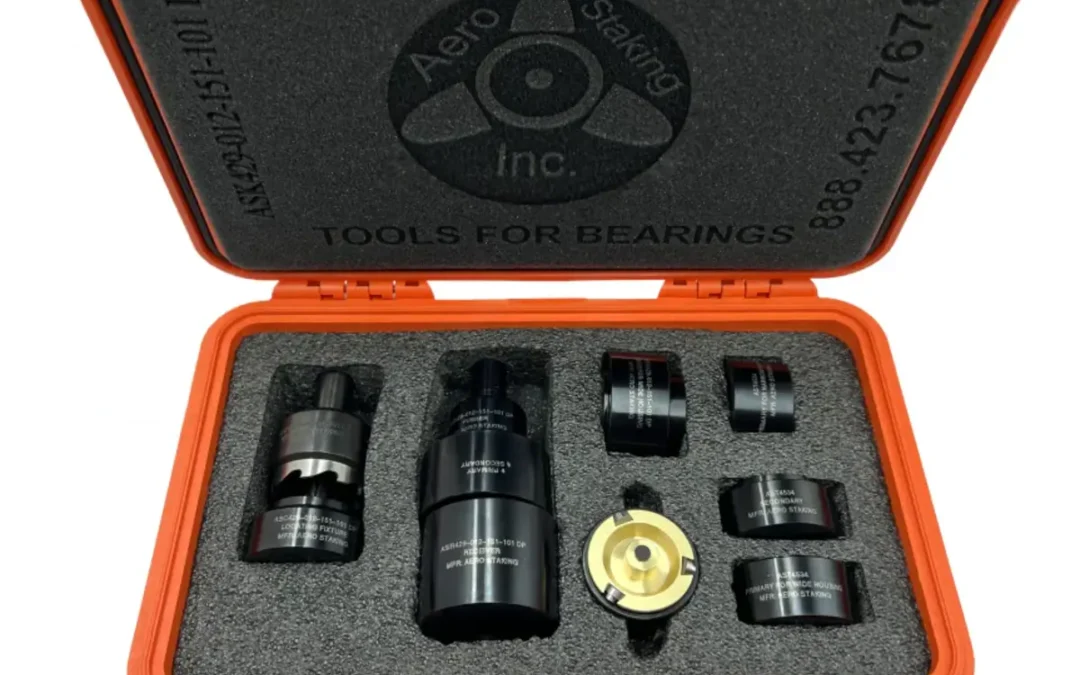
Choosing between drill press and portable tooling starts with the assembly, not the machine. A drill press setup may suit parts that fit a supported workstation. A portable bearing swaging tool may suit work where moving the component proves difficult, or access limits the setup.
Neither approach automatically delivers better results. The bearing design, approved forming method, support arrangement, and inspection requirements guide the choice. We help teams evaluate these details before selecting equipment.
This comparison explains how workspace, production demands, and component geometry affect that decision. It also highlights when standard tooling may need application-specific support or a custom design to perform the required operation within your working space.
Two Approaches to Aerospace Bearing Swaging
Both configurations form the specified retention feature through controlled material displacement.
A drill press swaging tool operates at a stationary machine. A portable bearing swaging tool brings the forming setup to a suitable work location. Selection depends on whether each configuration accommodates the assembly and approved process.
How Drill Press Bearing Swaging Tools Work
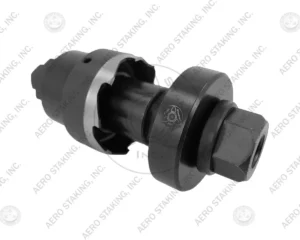
Our drill press tri-roller tooling uses three rollers to support controlled forming. The workstation must accommodate the component, fixture, and required tool travel.
A tri-roller swaging tool needs correct centering and support. Machine availability alone does not establish compatibility with the job.
How Portable Bearing Swaging Tools Work
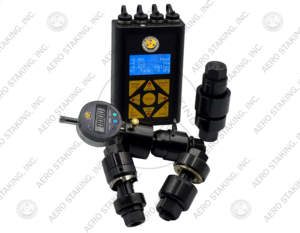
A portable swaging tool supports forming outside a traditional drill press station. Our portable tri-roller options serve maintenance applications where mobility matters.
A portable bearing swaging tool still requires suitable clearance, stable support, and the specified operating method. Portability does not guarantee access to every bearing location.
Accessibility and Workspace Considerations
Check the entire working envelope before choosing bearing swaging equipment.
Consider:
- Space around the bearing and behind the assembly
- Component weight and handling requirements
- Clearance for fixtures, adapters, and tool movement
- Access for inspection after forming
A large component may favor portable equipment, provided the setup reaches the feature correctly.
Production Volume and Repeatability
Repeated jobs may benefit from a dedicated workstation with consistent locating and support arrangements.
However, volume alone cannot determine the choice. A portable swaging tool may suit recurring maintenance tasks when moving assemblies adds unnecessary handling.
Both types of bearing swaging tools require maintained contact surfaces, controlled settings, and documented checks.
Tool Setup and Application Requirements
We review the drawing and work instruction before recommending aerospace bearing tools.
Confirm bearing dimensions, housing geometry, material, approved forming method, and acceptance criteria. Complete the required bearing installation checks before swaging begins.
Select a drill press swaging tool only when the machine and fixture support the specified operation.
Comparison Table: Drill Press vs Portable Swaging Tools
Use these practical differences to assess your workspace.
| Consideration | Drill press setup | Portable setup |
| Work location | Stationary workstation | Suitable maintenance or assembly location |
| Part handling | Component must fit the station | May reduce component relocation |
| Access | Requires machine and fixture clearance | Requires local tool and support clearance |
| Repeated work | Can suit dedicated fixtures | Can suit recurring mobile tasks |
| Acceptance | Drawing and inspection requirements | Same application-specific requirements |
When Custom Tooling May Be Required
Unusual housings, restricted access, or challenging support points may call for custom tooling.
We can also assess related forming options when the specified feature requires another approach. Custom aerospace tooling should address a defined application need.
FAQ
Is a Portable Bearing Swaging Tool Less Accurate?
Not inherently. Accuracy depends on compatible tooling, stable positioning, process control, and verification.
Can Both Setups Use the Same Tooling?
Do not assume interchangeability. Confirm the tool, adapters, drive arrangement, and approved procedure before use.
Choose Around Your Assembly
The right swaging setup should fit your assembly, workspace, and production requirements. A drill press may be practical for repeatable work at a dedicated station, while a portable bearing swaging tool can offer greater flexibility when moving components is difficult.
The important part is choosing equipment that supports the required forming process without compromising access, stability, or inspection.
Not sure which setup works best for your application? Get in touch with our team to discuss your bearing requirements and explore tooling options that fit your operation.